Rodolfo Dordoni: the Milan architect who shaped outdoor living at two houses
Born in Milan in 1954 and trained at the Politecnico, Dordoni spent two decades as art director at Roda and designed Bitta for Kettal — a body of outdoor work that ran in parallel with his celebrated interiors practice until his death in August 2023.
Rodolfo Dordoni was born in Milan in 1954 and graduated in architecture from the Politecnico di Milano in 1979. In the four decades that followed, he became one of the most consistently productive figures in Italian furniture design — art director of Cappellini from 1979 until the late 1980s, then of Minotti from 1998 until his death, and simultaneously the hand behind the outdoor programmes of Roda and Kettal. He died on 1 August 2023 at the age of 69.
The outdoor work was never peripheral. From 2005, Dordoni was art director of Roda, the Italian house based in Gavirate, Lombardy, whose founding idea — IN and OUT, the belief that outdoor furniture deserves the same quality, comfort and design rigour as interior furniture — matched his own instincts precisely. The first collection he designed there was Network, a modular teak-and-woven-belt seating system that became Roda's signature piece and remains the clearest expression of the IN and OUT premise in the catalogue.
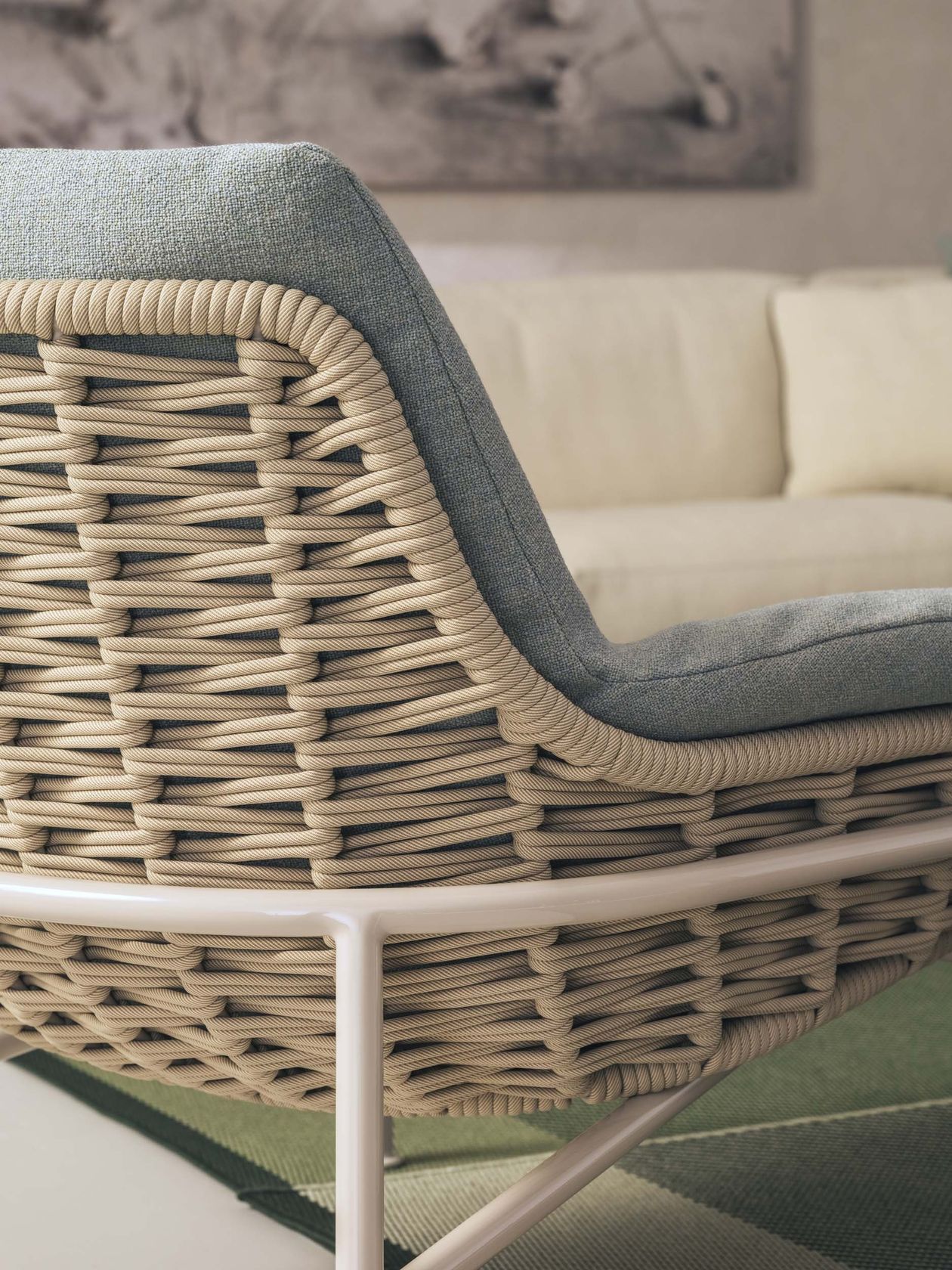
My aim was to create dense braiding that would still let the air through, reminiscent of the braiding of the ropes used to moor boats, which makes the pieces look lightweight. At the same time, they look just like cosy nests in natural colours to sit back and relax in.
A continuing body of work at Roda
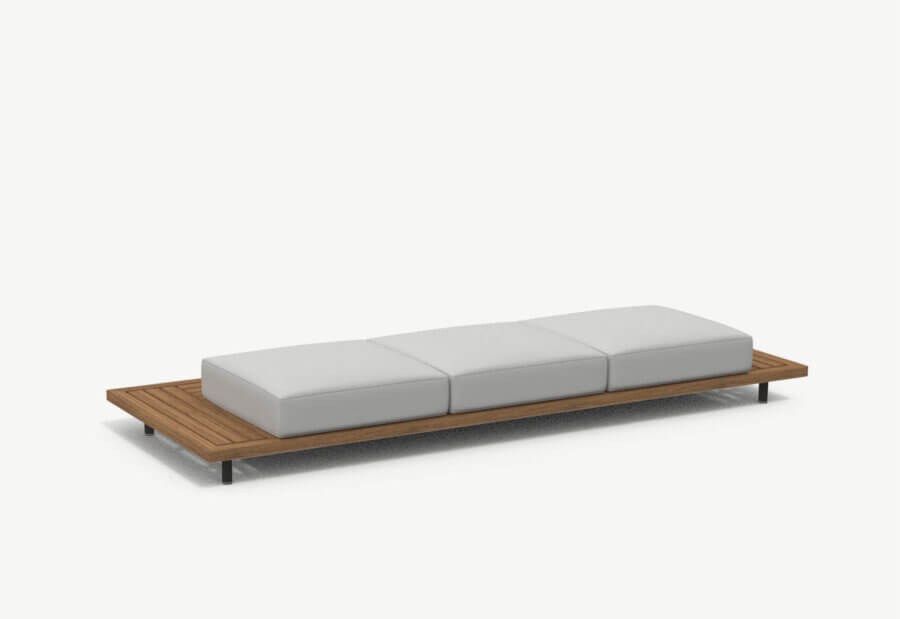
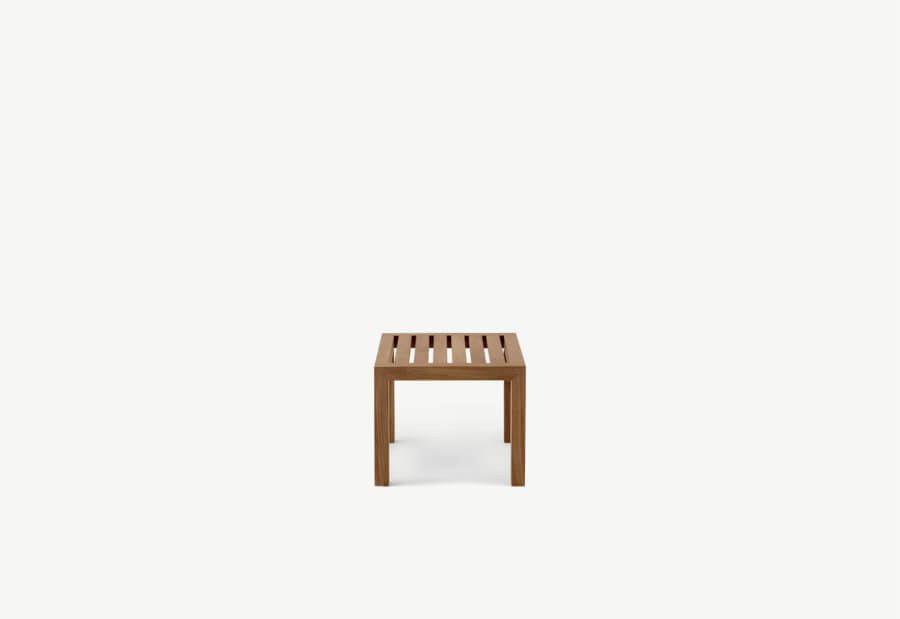
After Network, Dordoni's work at Roda kept expanding across material registers. Piper brought a tubular aluminium frame with woven straps and stackable chairs — a lighter, more architectural direction. Mamba developed fully upholstered outdoor seating on aluminium with hydro-draining polyurethane padding, pushing closer to interior sofa territory. Philia, one of his later Roda pieces, is a modular sofa in FSC-certified teak with Batyline support, its slatted base a direct reference to the carabottino grating of yacht decks. Dandy takes the logic further still: a modular system on an aluminium frame with elastic straps and removable fabric covers, a textile sofa that lives fully outside. Eden continues the modular teak premise across lounge configurations, with Batyline or padded-belt backrests and hydro-draining cushions.
Bitta and the nautical reference at Kettal
Dordoni's parallel work for Kettal, the Barcelona house founded in 1966, produced a different body of outdoor seating. Bitta — the name comes from the Italian word for a mooring bollard — was designed around dense braiding that lets air through, its visual reference the rope-work used to secure boats at dock. The construction pairs aluminium frames with braided polyester cord and deep cushions: seating that reads as nest-like and inviting while remaining structurally precise. Bitta Lounge and Grand Bitta extend the idea — the Lounge in softer, rounder proportions; Grand Bitta at larger scale with the same cord-over-aluminium logic. Molo, a further Kettal collection by Dordoni, takes a different direction: horizontal geometry across modular sofas, benches and deckchairs.
For US buyers, both houses reach the market through authorised dealer networks. The Dordoni-designed collections at Roda form the backbone of the catalogue; his Kettal pieces are maintained as part of the house's core range. His work across both addresses the same question: what does it mean to furnish a terrace or garden with the same rigour brought to an interior room?