How Varaschin went from a rattan workshop to woven rope and aluminum
A Veneto family business started by hand-weaving natural fiber in 1969. When the rattan supply that built its early export business tightened, Varaschin rebuilt its catalogue around synthetic rope, webbing and acrylic thread instead.
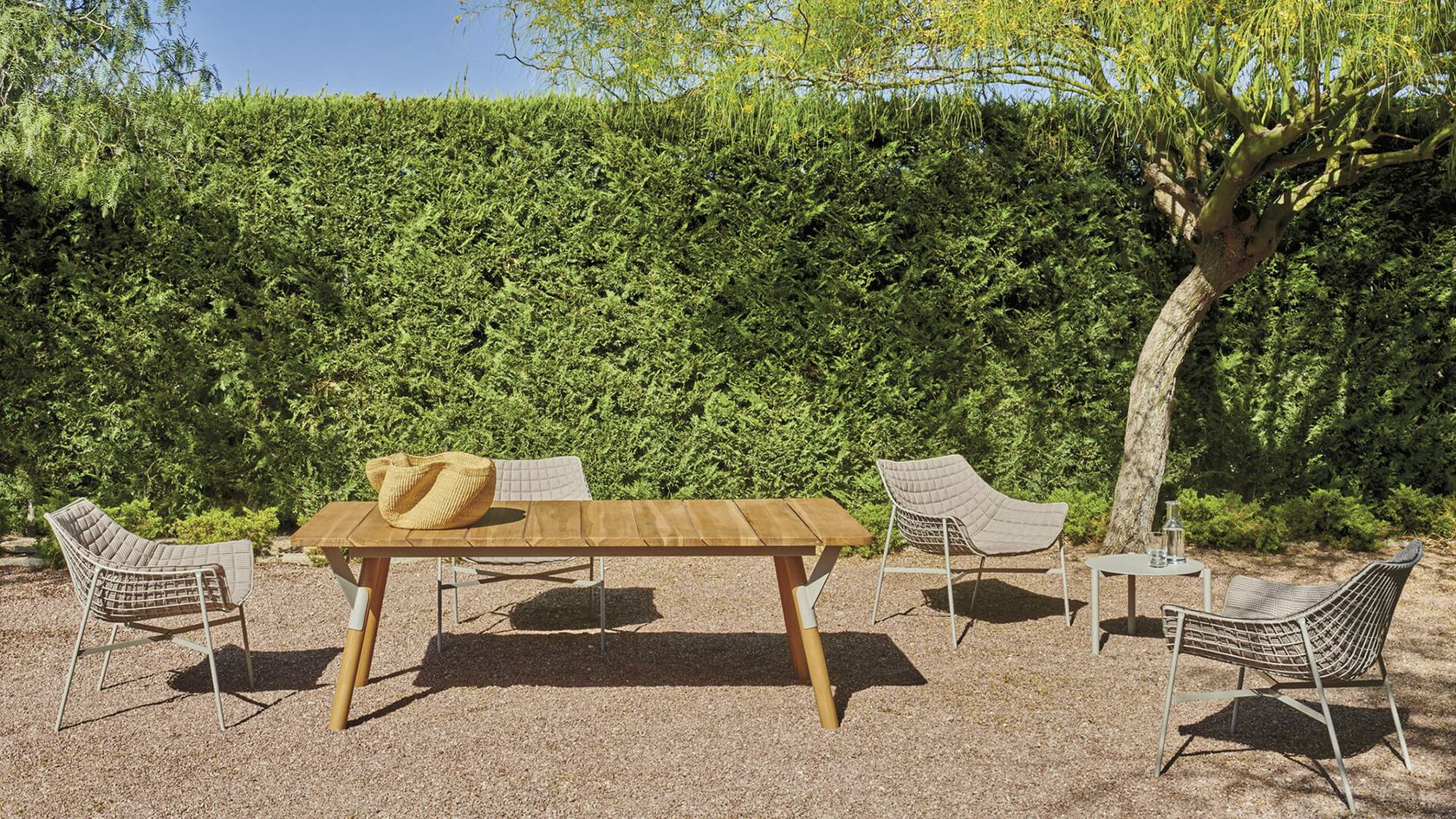
Varaschin is an Italian outdoor furniture house founded in 1969 by brothers Ugo and Pietro Varaschin in Vittorio Veneto, a town in the Treviso foothills. It began as a family workshop where the brothers learned to hand-weave natural fiber, and its first export business rode the rattan boom of the 1970s. When natural fiber supplies later tightened, Varaschin made the shift that still defines it: it moved its weaving know-how onto synthetic rope, woven webbing and acrylic thread, rebuilding a catalogue that today runs to roughly thirty collections, all dedicated to outdoor furniture.
That shift was not a single event but a gradual retooling of a hand-weaving skill onto new materials — the same hands that once worked rattan cane learned to work synthetic cord instead. In 2011 the company restructured its offering from around a hundred collections down to about thirty, a deliberate narrowing rather than a retreat. The current roster includes designers Monica Armani, Calvi Brambilla, Daniele Lo Scalzo Moscheri and Alain Gilles, each responsible for specific lines within the pared-down catalogue.
The rattan boom of the 1970s launched Varaschin's first export business — and when that raw material tightened, the same weaving hands went to work on synthetic rope instead.
What replaced natural rattan
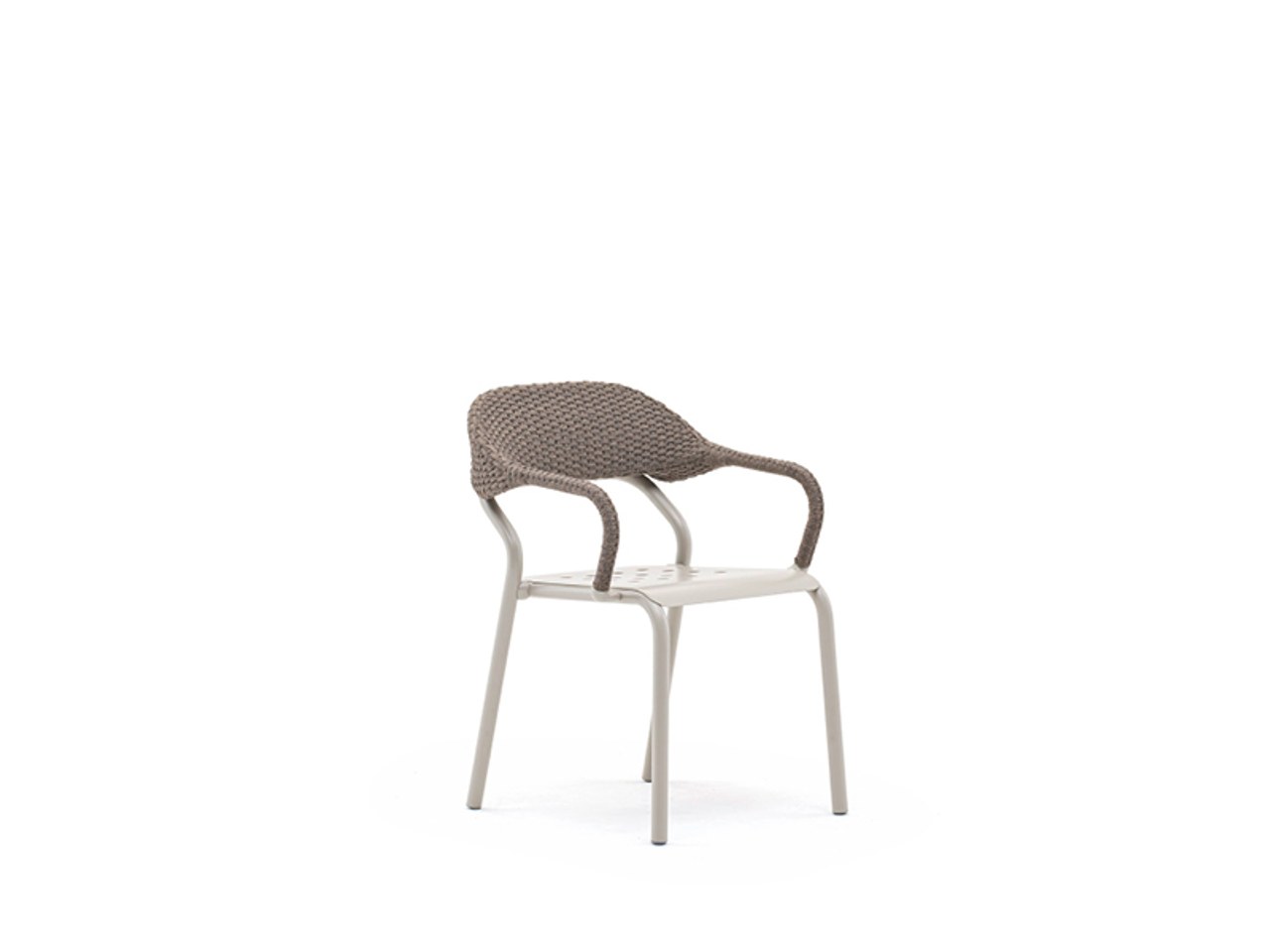
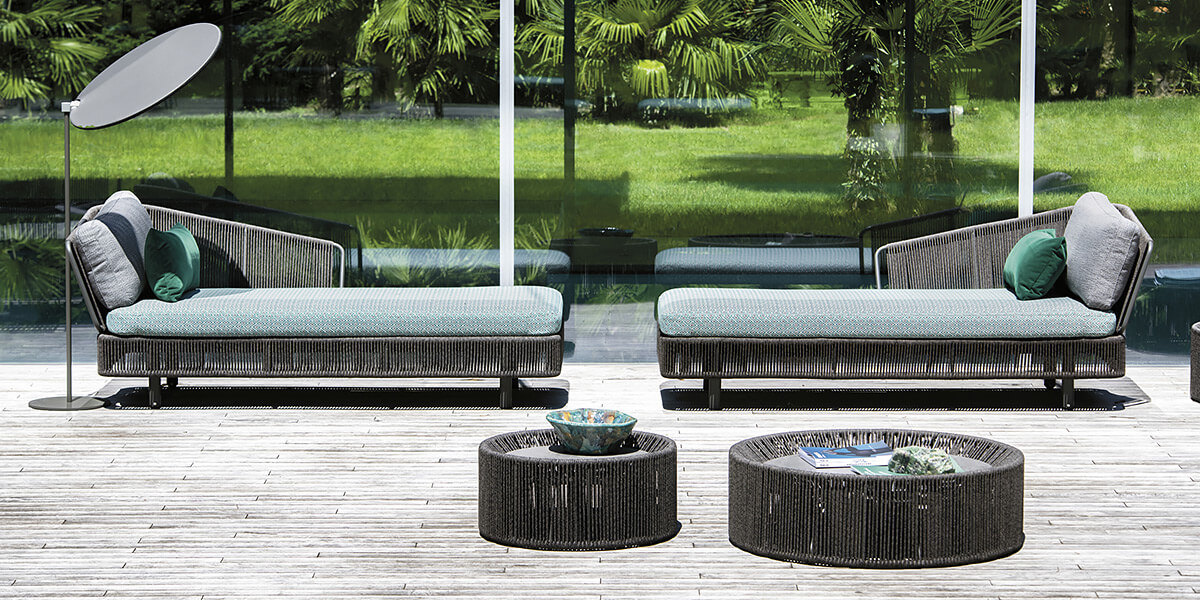
Babylon pairs painted aluminum with woven synthetic rope across sofas, an armchair, an ottoman and low tables. Noss and Summer Set build powder-coated aluminum frames with handwoven synthetic fiber. Belt and Belt Air use a different route, framing modular seating on solid okoume wood rather than metal. Bali keeps a natural material at the frame level, with solid teak bases under woven and upholstered seating.
Where the catalogue goes next
Away from seating, Varaschin runs a parallel table program: Plinto's base form references a tree trunk and its roots, Dolmen is an extendable range on a powder-coated aluminum frame with HPL tops, and System builds tables, coffee tables and benches around a radial rhomboid profile in a modular layout. Clever, Smart and Reuse round out the lounge side with sofas, rocking chairs and armchairs in a mix of technical fabric and softer, sinuous forms.
For US buyers, Varaschin collections reach the market through authorized dealers, with lead times that vary by line and finish. The full catalogue, with designer attributions, is in our Varaschin profile.